


Cordel de Kevlar com Capa de Poliéster | 1,5 a 4 mm
Price per meter – always in one piece
The quantity you add to your cart = the number of meters.
Cordel de Kevlar com Capa de Poliéster | 1,5 a 4 mm - 1,5 mm / Preço por metro está esgotado e será enviado assim que estiver de novo em estoque.
Care information
Care information
Display general product information or specific product information using metafields.
Delivery and Shipping
Delivery and Shipping
Add some general information about your delivery and shipping policies.

Cordel de Kevlar com Capa de Poliéster | 1,5 a 4 mm

Cordel de Kevlar com Capa de Poliéster | 1,5 a 4 mm - 1,5 mm / Preço por metro está esgotado e será enviado assim que estiver de novo em estoque.
Descrição
Descrição
O cordel de Kevlar com capa de poliéster combina a resistência à tração extrema do aramida com a resistência à abrasão de uma capa exterior de poliéster entrançado. A alma de aramida oferece alongamento mínimo e elevada carga de rutura, enquanto a capa protege a alma contra o desgaste por fricção e a radiação UV. Disponível em 1,5, 2, 3 e 4 mm, encomendável por metro.
Propriedades do cordel de Kevlar com capa de poliéster
-Alma de aramida com alongamento mínimo sob carga
-Capa de poliéster protetora contra abrasão e UV
-Resistente ao calor
-Não apodrece e absorve praticamente nenhuma humidade
-Corte personalizado, disponível por metro
Carga de rutura do cordel de Kevlar por diâmetro
Os valores abaixo não foram retirados da ficha técnica do fabricante, mas medidos no nosso próprio equipamento de tração de 50 kN — cinco ensaios de tração por corda, de acordo com a ISO 2307:2019.
| Diâmetro | Carga de rutura | Aplicação | Ensaio |
|---|---|---|---|
| 1,5 mm | 107 kg | Mini gruas, modelismo, elevação de precisão | Base de dados de ensaios |
| 2 mm | 117 kg | Tirantes, sistemas de suspensão | Ver ensaio |
| 3 mm preto | 220 kg | Suspensão para cargas pesadas, industrial | Ver ensaio |
| 3 mm amarelo néon | 162 kg | Visibilidade, sinalização | Ver ensaio |
| 4 mm | 302 kg | Aplicações de elevação, construção | Base de dados de ensaios |
Qual o diâmetro de cordel de Kevlar de que necessita?
Escolha o diâmetro com base na carga, não na intuição. Como regra geral, utilize um fator de segurança de 5 para utilização estática e de 10 para cargas dinâmicas ou de choque. Tenha também em conta que um nó reduz significativamente a carga de rutura. Tem dúvidas? Envie um e-mail para info@prorope.com — teremos todo o gosto em ajudá-lo a encontrar a solução adequada.
Procura resistência máxima e a proteção UV não é um fator determinante? O Kevlar puro de 3 mm atinge 596 kg — quase três vezes mais do que o mesmo diâmetro com capa.
Payment & Security
Payment methods
Your payment information is processed securely. We do not store credit card details nor have access to your credit card information.
Why Kevlar cord with polyester sheath?
An aramid core that barely stretches and can take the heat, inside a polyester sheath that protects the core from UV and rubbing. Thin cord that holds more than you would expect, by the metre or on a reel.
What will you use the Kevlar cord for?
Choose your application. See why Kevlar works there, which diameter fits and when another cord is the smarter choice.
Kevlar cord for mini cranes, small hoists and model making
There is little room on a small drum or pulley. 1.5 mm Kevlar cord is thin enough to spool neatly, yet reached 107 kg in our tensile test. Because the core barely stretches, the load hangs still and your hoist responds immediately.
- Thin cord for small drums and pulleys
- Hardly any stretch, so no springy effect
- The polyester sheath protects the core on drum and pulley
Our advice: 1.5 mm for a load up to about 20 kg in steady use, or 10 kg with shock loading. More weight? Take 2 or 3 mm, if it fits your drum.
Breaking strength is not a working load. Never use Kevlar cord to lift or belay people.
Kevlar cord for heat and friction
Where things get hot, from the surroundings or from a cord running over a wheel or edge, aramid lasts longer than most synthetic cords. Aramid does not melt: it only chars at around 425 °C.
- Hardly any strength loss during prolonged exposure to 180 °C
- Keeps its strength where Dyneema and HMPE are already softening
- Does not melt or drip, even under brief intense heat
Our advice: choose the diameter based on the load, not on gut feeling. Note: the sheath is polyester and melts at around 250 °C. Under direct heat, the sheath is the weak point, not the core.
Heat but no sun, and maximum strength needed? Pure 3 mm Kevlar without a sheath reached 596 kg, almost three times as much as 3 mm with a sheath. Without a sheath, however, the core is sensitive to UV.
Kevlar cord for tension lines and suspension systems
For a tension line or suspension system you want a thin cord that does not stretch and does not stand out. Kevlar with a polyester sheath stays taut, even after months under tension.
- 117 kg measured at 2 mm, 220 kg at 3 mm
- Hardly any stretch, so the line stays taut
- The sheath protects the core against UV and moisture
Our advice: 2 mm for light suspension up to about 20 kg, 3 mm up to about 40 kg under steady load.
Does the line need to stand out, for example as a boundary? Choose the 3 mm Kevlar cord with neon yellow sheath (162 kg measured).
Kevlar cord for industry and heavier work
In machines, workshops and structures where a cord has to hold a load and cope with heat, 3 or 4 mm Kevlar cord is the logical choice. It is thin for what it holds.
- 220 kg measured at 3 mm, 302 kg at 4 mm
- Minimal stretch under load
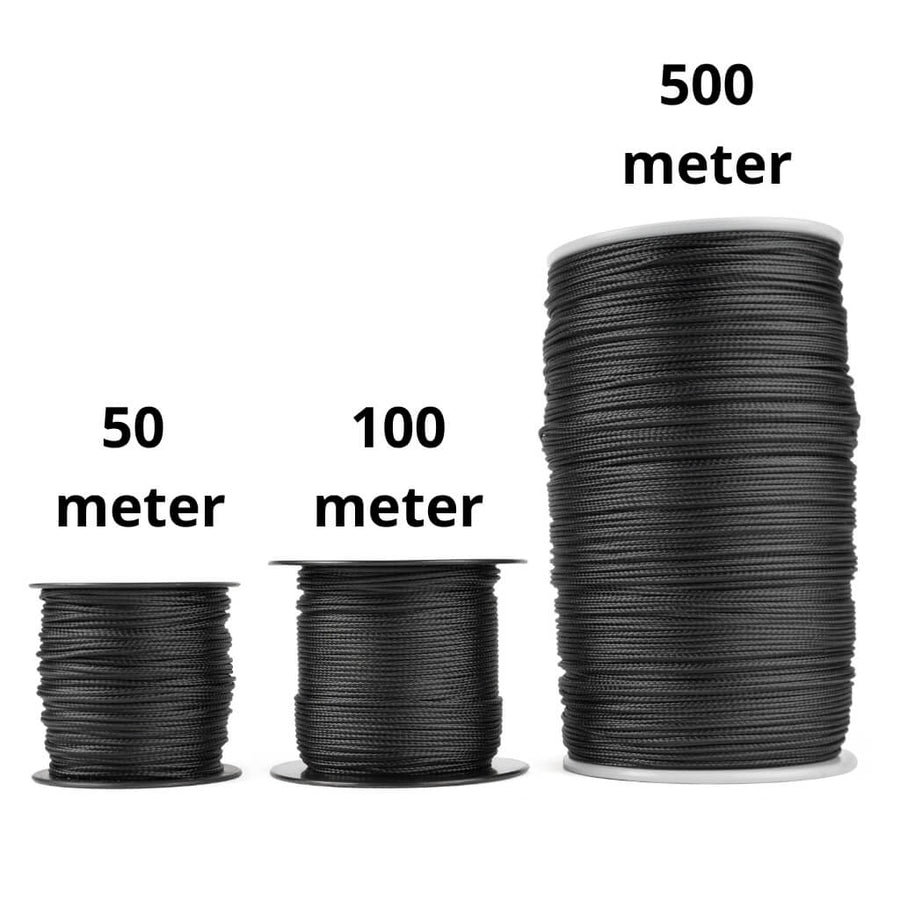
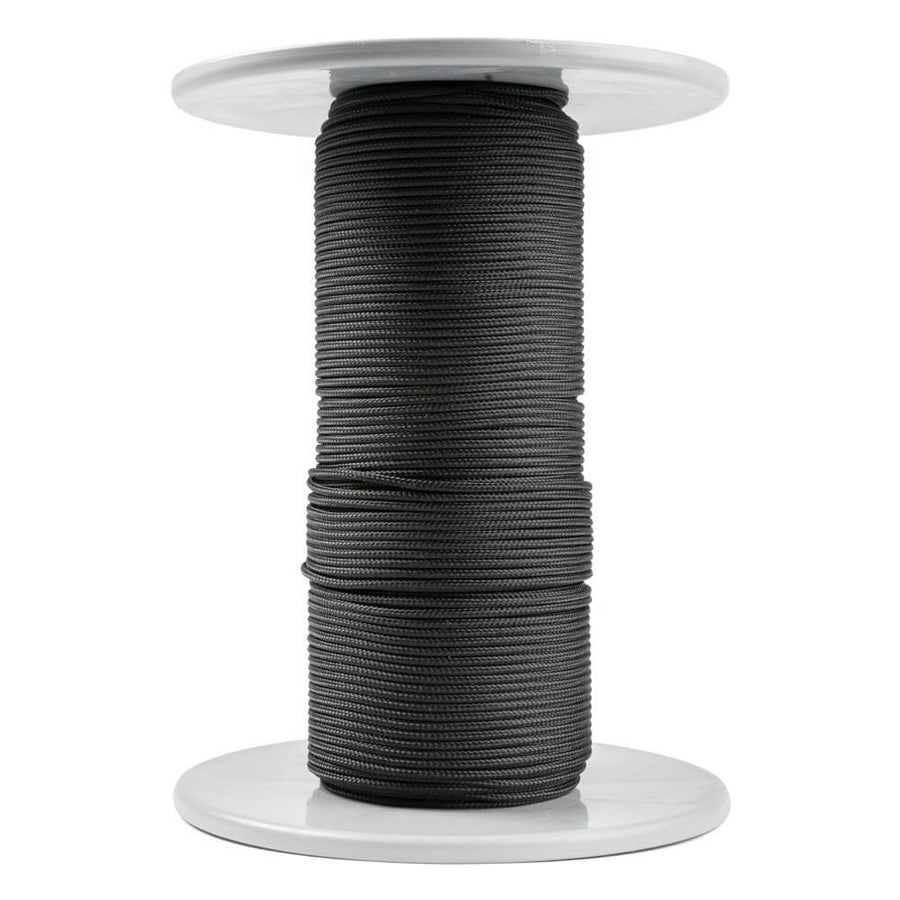
- On reels of 50 to 500 metres for regular buyers
Our advice: work with a safety factor of 5 for steady loads and 10 for shock loads. For 4 mm that is about 60 kg, or 30 kg with shock loading.
Need more than 302 kg and heat is not a factor? Then take a look at Dyneema SK78 with polyester sheath.
Which diameter of Kevlar cord do you need?
Choose a diameter. You will see the measured breaking strength, a safe working load, the price per metre and what you save on a reel.
Choose your diameter
- Breaking strength
- Choose a diameter
- Price per metre
- –
Better value on a reel
Breaking strength measured to ISO 2307:2019, without a knot. Working load based on the rule of thumb: safety factor 5 for steady loads, 10 for shock loads. A knot reduces the breaking strength considerably.
Tested in-house, not copied
All breaking strengths on this page come from our own tensile test bench: five tests per diameter, to ISO 2307:2019.
How we test
We show how we measure and publish, even when a cord scores lower than you might expect.
Not sure about the diameter?
Email us what you want to hang, tension or pull. We will help you choose the diameter and length.
Kevlar cord with or without a sheath, or Dyneema?
Thin, strong cord in a few versions. Here is how to choose between strength, visibility, UV and heat.
| Cord | Breaking strength 3 mm | Price | Outdoors and heat | Best for |
|---|---|---|---|---|
| Kevlar cord with polyester sheathThis page | 220 kg own test |
On a reel 1.5 to 4 mm |
Sheath protects against UV, core does not melt | Heat, friction, tension lines, mini cranes |
| Kevlar with neon yellow sheath | 162 kg own test |
€1.25/m | Sheath protects against UV | Where the cord needs to stand out |
| Pure Kevlar without sheath | 596 kg own test |
€1.95/m | Sensitive to UV, does not melt | Maximum strength, indoors or out of the sun |
| Dyneema SK78 with polyester sheath | See product page | From €1.95/m | Sheath protects against UV, softens from approx. 125 °C | Strong cord where heat is not a factor |
Thermal data as stated by the fibre manufacturer. Kevlar is a brand name for aramid.
Get the most out of your Kevlar cord
A knot reduces the breaking strength considerably. Take that into account when choosing the diameter.
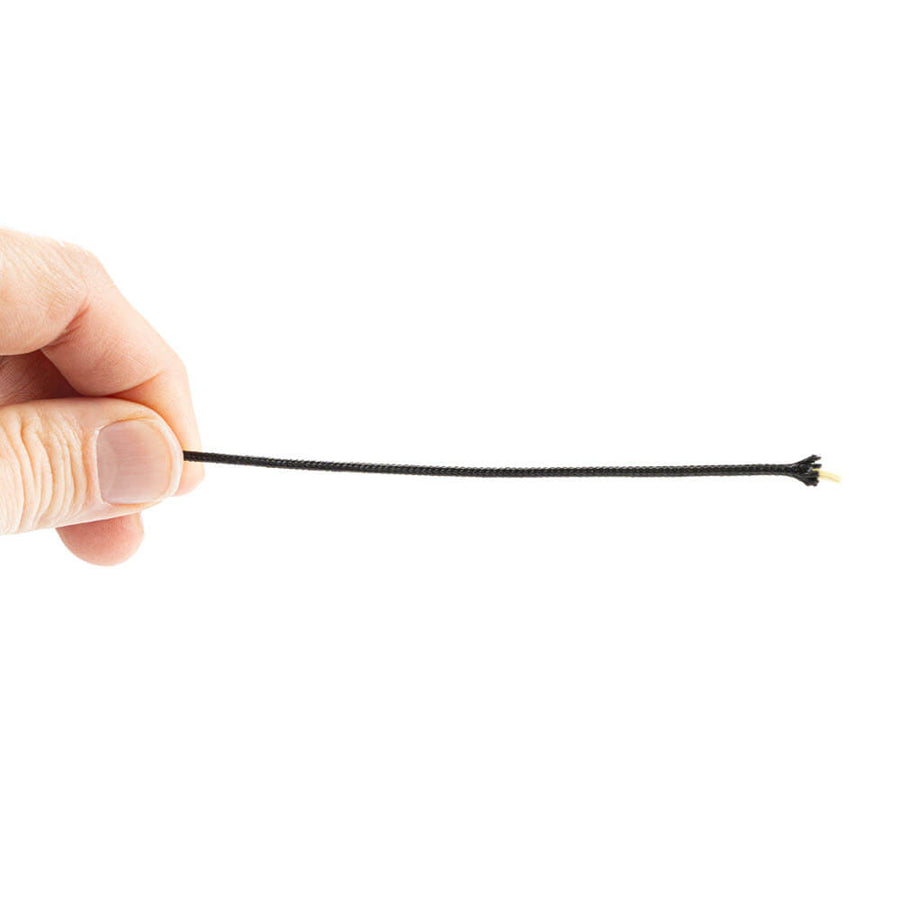
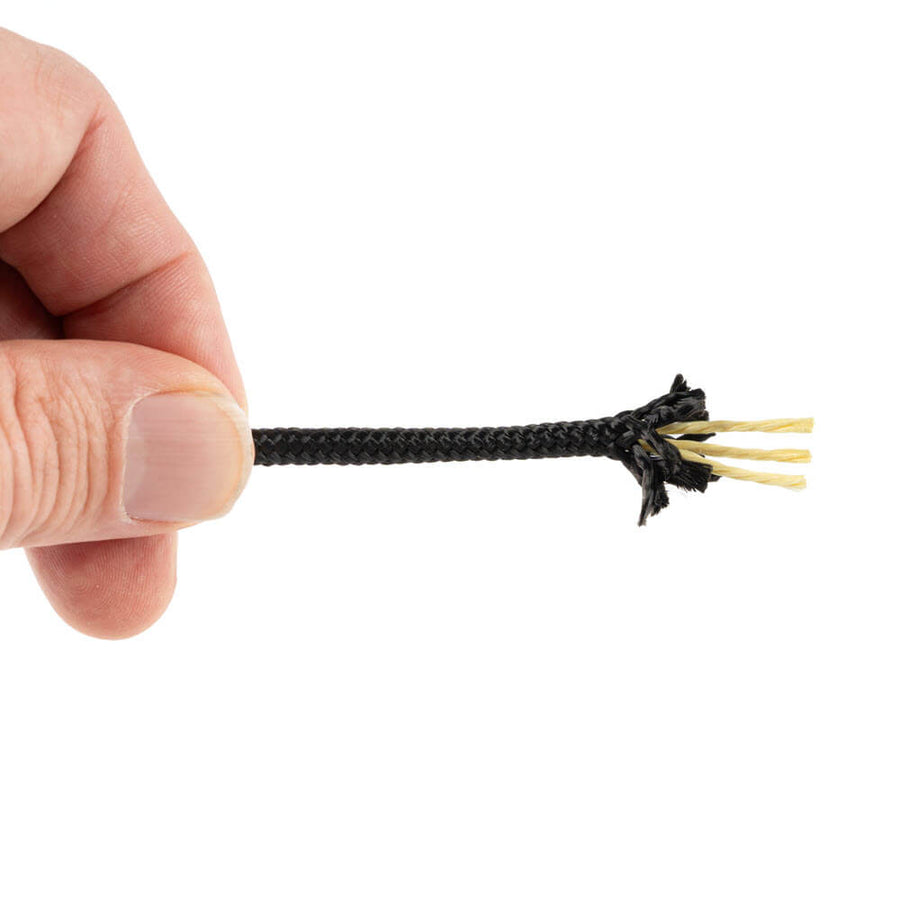
Aramid is sensitive to UV. If the sheath is worn through and you can see the yellow core, replace the cord wherever it has to hold a load.
Aramid does not melt. Only briefly melt the polyester sheath closed, or secure the end with tape.
Aramid is tough. Blunt scissors or a blunt knife will fray the core.
Do not let the cord run over a sharp edge under load, and use generously sized pulleys.
Do not use Kevlar cord for climbing, belaying or lifting people.
Frequently asked questions
How strong is Kevlar cord with polyester sheath?
Measured on our own test bench to ISO 2307:2019: 107 kg at 1.5 mm, 117 kg at 2 mm, 220 kg at 3 mm and 302 kg at 4 mm. That is the breaking strength without a knot, not the working load.
What safety factor should I use?
As a rule of thumb, a factor of 5 for steady, static loads and 10 for dynamic or shock loads. For 3 mm Kevlar cord, that works out at about 44 kg, or 22 kg with shock loading.
Kevlar or Dyneema: which should I choose?
If heat or friction plays a role, choose Kevlar: aramid does not melt and keeps almost all its strength during prolonged exposure to 180 °C, whereas Dyneema softens from around 125 °C. If heat is not an issue, also compare Dyneema SK78 with polyester sheath.
Can Kevlar cord be used outdoors?
With a sheath, yes: the polyester sheath protects the aramid core against UV and moisture. Pure Kevlar without a sheath is sensitive to UV and is therefore better suited to indoor use or out of the sun.
Should I order by the metre or on a reel?
The quantity in your cart is the number of metres; by the metre you receive the cord in one piece. A 50 to 500-metre reel is cheaper per metre, up to about half the price on the largest reels. The diameter guide above shows how much for each size.
Found your diameter?
Choose your diameter and reel at the top of the page. Order before 13:00, shipped today.
