
-

-

-
-

Liros
Liros XTR Racer – Racing-Schot 10 mm | Dyneema SK78 Kern | Aramid/Polyester Mantel | 6900 kg
Normaler PreisAb €9,95GrundpreisAuf Lager (308 Einheiten)-
Prorope.com
Prorope HMPE Winden-Verlängerungsleine mit Edelstahlösen
Normaler PreisAb €73,95Grundpreis-
Prorope
UHMWPE-Seil mit Polyester-Mantel – 3 mm Durchmesser
Normaler PreisAb €29,95GrundpreisAuf Lager (43 Einheiten)-


Unser Sortiment
Dyneema-Seile bei Prorope – Typenübersicht
 SK75
SK75Originale DSM/Avient Dyneema-Fasern mit der höchsten Abriebfestigkeit in unserem Sortiment. Stärker und leichter als Stahl. Die Wahl für den intensiven Einsatz.
SK75-Seil ansehen T70
T70Dieselbe Bruchlast wie SK75, jedoch weicher und geschmeidiger in der Konstruktion. Leicht zu spleißen und angenehm in der Hand.
T70 Hawkline ansehen HMPE
HMPETechnisch nahezu identisch mit SK75: extrem hohe Bruchlast, minimale Dehnung und geringes Gewicht. Standardmäßig blau, auf Anfrage in nahezu jeder Farbe erhältlich.
HMPE-Seil ansehenGemessene Bruchlasten – eigene Prüfbank (Durchschnitt aus 5 Zugversuchen, ohne Knoten · ISO 2307:2019, gemessen von Otto Tromm)
| Rope | Diameter | Construction | Breaking strength | ≈ kg |
|---|---|---|---|---|
| Prorope HMPE | 4 mm | 12-strand braided | 17,926 N | 1,827 kg |
| HMPE white + PES sheath | 5 mm | Core-sheath | 10,166 N | 1,036 kg |
| HMPE blue/gold | 5 mm | Braided | 9,266 N | 945 kg |
| HMPE + PES sheath | 4 mm | Core-sheath | 6,698 N | 683 kg |
| HMPE + black sheath | 3 mm | Core-sheath | 4,188 N | 427 kg |
| Dyneema SK78 cord | 1.5 mm | Braided, without core | 2,512 N | 256 kg |
Hinweis: Das 5-mm-Kernmantel-Seil erzielt höhere Werte dank zusätzlicher Mantelfasern, trägt jedoch das typische Kernmantel-Risiko. Konstruktion und Verarbeitung bestimmen das Endergebnis mindestens ebenso stark wie die Faser selbst.
Eigene Prüfbankdaten 2026
Was Dyneema-Seil unter Last wirklich leistet
Gemessen von Otto Tromm – 5 Zugversuche pro Seil, Prorope-Prüfmethode (ISO 2307:2019). Wir veröffentlichen auch die Abweichungen – nicht nur die vorteilhaften Zahlen.
Im Knoten werden die äußeren Fasern stärker belastet. Ein Spleiß erhält nahezu die volle Festigkeit – ein Knoten verliert fast die Hälfte.
3 mm HMPE: 4.188 N → 1.880 N mit Knoten (−55%)5 mm HMPE: 9.266 N → 4.834 N mit Knoten (−48%)
Durch das vorherige Belasten des Seils richten sich die Fasern aus. Spannen Sie eine neue Winschleine stets ohne maximale Last vor.
5 mm HMPE: 9.266 N ungespannt → 10.642 N nach dem Vorspannen (+15%)In 5 von 5 Tests blieb der Mantel optisch intakt, während der Kern vollständig gebrochen war. Ein Kernmantelseil kann innen brechen, ohne dass äußere Schäden sichtbar sind.
Empfehlung: Wählen Sie für sicherheitskritische Anwendungen eine 12-litzige geflochtene KonstruktionUnsere 1,5 mm SK78 gab kurz vor dem vollständigen Bruch ein Knackgeräusch ab – in der Praxis ein Warnsignal.
1,5 mm SK78 gemessen bei 2.512 N – außergewöhnlich hohe Festigkeit für diese dünne SchnurEntgegen der Erwartung: Unsere 1,5 mm mit Beschichtung erzielte nahezu denselben Wert wie die Variante ohne. Wählen Sie eine Beschichtung für Abriebfestigkeit oder Griffigkeit – nicht für höhere Festigkeit.
1,5 mm ohne Beschichtung: 2.512 N — mit Beschichtung: 2.444 NVergleich
Dyneema-Seil vs. Stahldraht
| Property | Dyneema rope | Steel cable |
|---|---|---|
| Weight | Up to 85% lighter | Heavy |
| Breaking strength | Equal or higher (by weight) | High |
| Buoyancy | Floats | Sinks |
| Snapback on break | Minimal — safer | Dangerous |
| Corrosion resistant | 100% — will not rust | Rusts |
| Handling | Flexible, no splinters | Stiff, risk of wire breakage |
| Elongation at break | < 4% | 1–2% |
Conclusion: Wählen Sie Dyneema-Seil, wenn Sie die Festigkeit von Stahldraht benötigen – ohne das Gewicht, die Korrosion und das Sicherheitsrisiko – an Winden, Offshore und in der Hebearbeit.
Anwendungen
Wo Dyneema den Unterschied macht
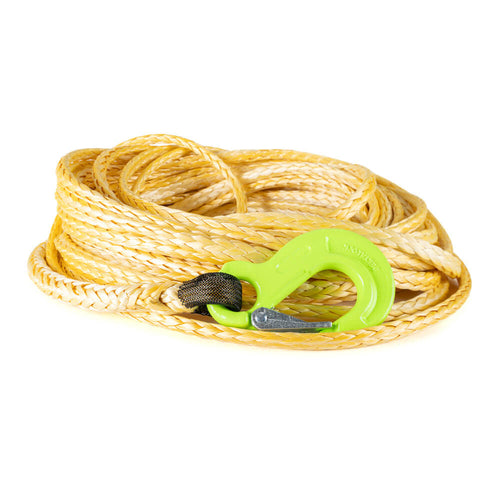
- Winschleinen mit Haken (SK75, 6–16 mm)
- Bergungsleinen und Soft-Schäkel
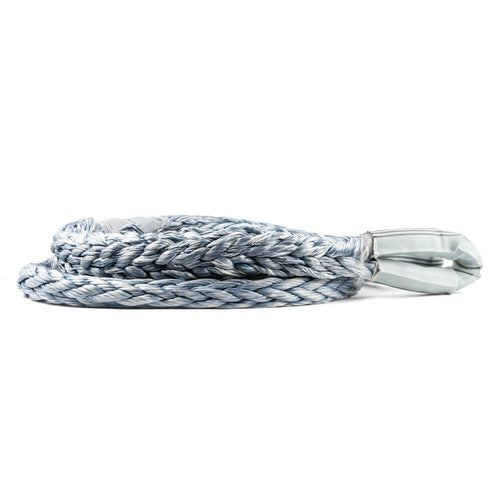
- Schleppleinen (bis 28 mm, Bruchlast von mehreren hundert Tonnen)
- Bergesysteme
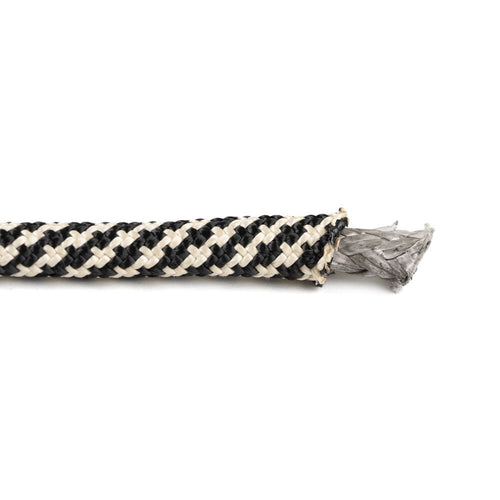
- Fallen, Schoten und Trimmleinen
- Rennleinen (Liros XTR Racer)
- Hawklines (T70 Hawkline)
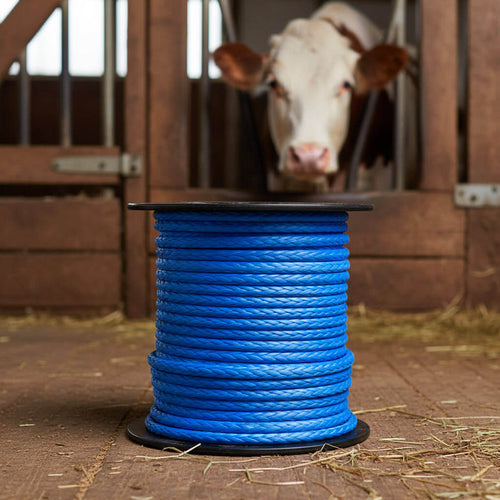
- Hebleinen, Flaschenzüge und Sicherungsleinen
- Stahldraht-Ersatz an Kränen und Winden
- Schlepp- und Zugseile für Lkw und Landwirtschaft
- Vieh- und MaschinenSeile, Gülleschieberseil
Technische Informationen
Spezifikationen, Hinweise & verfügbare Durchmesser
Technical specifications
| Material | UHMWPE (Ultra High Molecular Weight Polyethylene) |
| Specific gravity | 0.98 g/cm³ — floats |
| Elongation at break | 3–4 % |
| Melting point | 144–152 °C |
| Operating temperature | Softens from approx. 125–130 °C |
| Water absorption | Virtually none |
| UV resistance | Very high |
| Chemical resistance | Excellent (salt, acids, oil) |
Points of attention when using
- 1 Pre-tensioning: tension the rope first without maximum load. Our own tensile-test data shows up to +15% extra breaking strength after pre-tensioning.
- 2 Bend radius: avoid sharp bends — maintain a bend radius of at least 5–10× the rope diameter.
- 3 Temperature: prevent local overheating from friction. From 125–130 °C the material softens.
- 4 Termination: always finish Dyneema with a splice. A knot can cost up to 55% of the breaking strength.
Available diameters
Available per metre. The 28 mm is a towing cable for offshore / heavy pulling applications.
Dyneema-Seil kaufen bei Prorope
Direkt aus unserem eigenen Lager
Prorope liefert Dyneema und HMPE direkt aus unserem eigenen Lager. Erhältlich nach Meter – bestellen Sie genau die Menge, die Sie benötigen, ohne Mindestbestellmenge.
Lieferung an Privatkunden, Wassersportler, die Offshore-Industrie und die Landwirtschaft.
Beratung oder Angebot gewünscht?
Unsere Seilspezialisten helfen Ihnen gerne bei der Wahl des richtigen Durchmessers, der passenden Variante oder Ausführung.
+31-77 208 6139 · info@prorope.com
Häufig gestellte Fragen