
Prorope
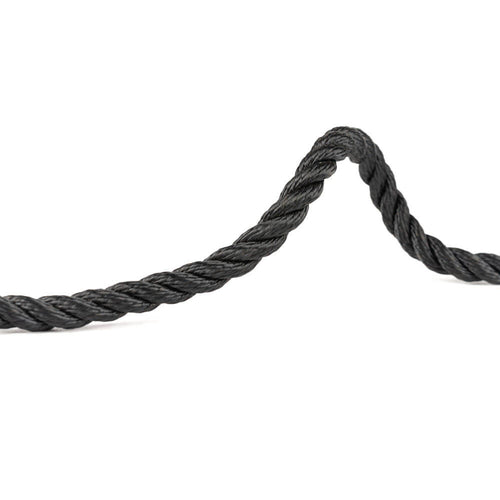
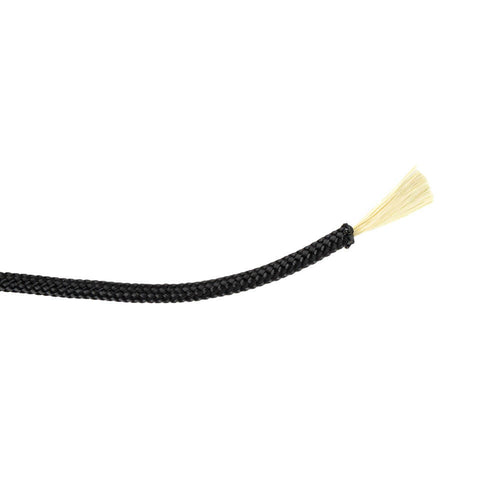
0.8 mm Dyneema with Black Polyester Cover
Regular priceFrom €0,50Unit priceIn stock (2444 units)-
Prorope
0.9 mm Dyneema with White Polyester Cover
Regular priceFrom €0,65Unit priceIn stock (1756 units)-
Prorope
Prorope Polyester Cord for Cellular/Pleated Blinds – 0.8 mm x 50 m
Regular price €10,50Unit price-
-
-

-


Why polyester is the standard for sun-exposed windows
Own test machine · Otto Tromm
What Prorope measures in-house: blind cord from 0.8 to 2.5 mm
Diameter alone says little. On our own breaking strength test machine, Otto Tromm ran five tensile tests per cord in accordance with ISO 2307: 0.8 mm pleated polyester 21 kg, 0.8 mm Dyneema 52 kg, 0.9 mm Dyneema 58 kg, 1.7 mm polyester 102 kg and 2.5 mm polyester 131 kg. Measured values, not manufacturer specifications.
Average 0.20 kN ≈ 21 kg (5 measurements, ISO 2307). Plenty for pleated and Duette blinds.
Read the test →Average 0.51 kN ≈ 52 kg. Ideal as a thin repair cord for (pleated) insect screen doors.
Read the test →Average 0.57 kN ≈ 58 kg. The white sheath is less visible against light fabric.
Read the test →Average 1.00 kN ≈ 102 kg (5 measurements, 0.94–1.07 kN, ISO 2307). Tested 15 Sep 2026 by Otto Tromm.
Read the test →Average 1.29 kN ≈ 131 kg (5 measurements, 1.20–1.39 kN, ISO 2307). The strongest polyester in this collection.
Read the test →Construction makes the difference, not just diameter. All five values were measured on our own test machine by Otto Tromm (ISO 2307, 5 measurements) — no manufacturer specifications.
Comparison
Polyester vs Dyneema vs nylon vs PP
| Property | Polyester | Dyneema | Nylon | Polypropylene |
|---|---|---|---|---|
| UV resistance | ★★★★★ | ★★★★★ | ★★☆☆☆ | ★★★☆☆ |
| Strength (indicative) | ★★★☆☆ | ★★★★★ | ★★★★☆ | ★★☆☆☆ |
| Abrasion resistance | ★★★★★ | ★★★★★ | ★★★☆☆ | ★★★☆☆ |
| Colourfastness | ★★★★★ | ★★★★★ | ★★☆☆☆ | ★★★☆☆ |
| Flexibility | ★★★★☆ | ★★★☆☆ | ★★★★☆ | ★★★★☆ |
| Price | €€ | €€€ | €€ | € |
| Best for | standard blinds | max. strength, min. diameter | not recommended (UV) | budget, short lifespan |
Conclusion: choose polyester for standard blinds — the best balance of strength, UV resistance and price. Choose Dyneema cord with a polyester sheath for the highest strength in the thinnest possible diameter. We advise against nylon due to UV sensitivity; polypropylene only as a budget choice.
The range
Types of blind cord at Prorope
 Pleated cord0.8 mm
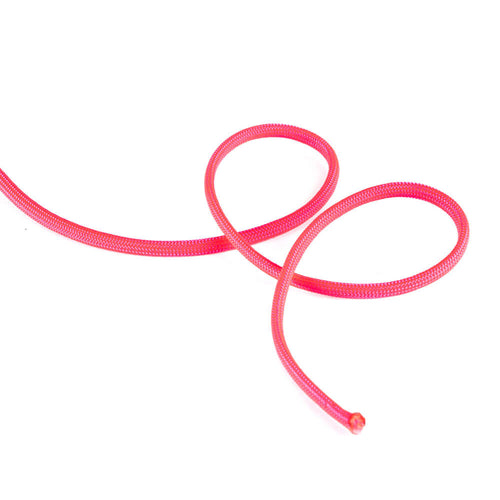
For pleated and duette shades that run through narrow fold channels. Hollow-braided polyester, on 50-meter spools.
White · black · light grey Standard1.3–2.5 mm
1.3 mm is the thinnest size with a core, 1.7 mm for aluminum blinds, 2.5 mm for wooden blinds. Braided with a core from 1.7 mm upward.
Measured 2.5 mm: 131 kg Max strength0.8–0.9 mm
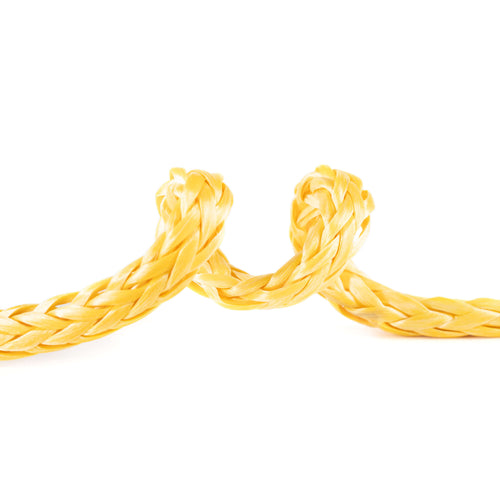
Dyneema core with a 32-strand braided polyester sheath. The sheath protects against UV and abrasion; the core delivers the strength. Available on reels up to 1,000 m.
0.8 mm 25 kg* · 0.9 mm 35 kg* Heavy duty2–5 mm
For patio covers and larger sun shading systems, where more tensile strength is needed than for regular interior blinds. Core-sheath construction.
White · black| Variant | Diameter | Construction | Colour | Breaking strength | Ideal for |
|---|---|---|---|---|---|
| Polyester pleated cord | 0.8 mm | hollow braided | white / black / light grey | 21 kg (measured) | pleated & Duette |
| Polyester blind cord | 1.3 mm | braided with core | white / black | t.b.c. | small blinds |
| Polyester blind cord | 1.7 mm | braided with core | white / black | 102 kg (measured) | aluminium blinds |
| Polyester blind cord | 2.5 mm | core and sheath, 2 strands | white / black | 131 kg (measured) | wooden blinds |
| Dyneema + polyester sheath | 0.8 mm | core and sheath, 32-carrier | black | 52 kg (measured) | pleated / insect screen door |
| Dyneema + polyester sheath | 0.9 mm | core and sheath, 32-carrier | white | 58 kg (measured) | pleated & Duette |
| HMPE + polyester sheath | 2–5 mm | core and sheath | white / black | t.b.c. | sun shading, patio |
t.b.c. = not yet individually tested on our test machine (incl. 1.0 / 1.3 mm polyester). Measured values: ISO 2307, 5 tensile tests, Otto Tromm / Prorope.
Applications
Where the right cord makes the difference
The standard for horizontal aluminum slats.
Heavier slats with a wider headrail (50 mm or larger).
Thin cord that runs through the narrow channels of the folds — polyester or Dyneema.
For tensioning and operating the screen system.
One cord tilts the slats, one drives the winding tube. The winding cord is replaced most often.
Sleek, colorfast cord for visible applications where appearance matters.
Store the cord without sharp kinks — a permanent kink can accelerate localized wear. When replacing, choose the same or nearly the same diameter as the original, so it moves smoothly through pins and guides.
Buy blind cord at Prorope
Direct from our own stock
Polyester cord on 50 and 200 meter spools, Dyneema cord by the meter and on reels up to 1,000 meters. Order before 1:00 PM on a business day and your order ships the same day.
We supply consumers, interior fitters, sun shading specialists and installers.
Need advice or a quote?
Our rope specialists are happy to help with the right diameter, variant or color.
+31-77 208 6139 · info@prorope.com
Frequently asked questions